


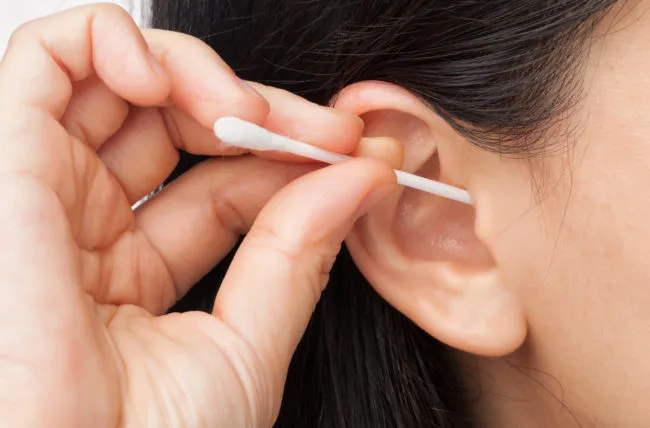
According to the World Health Organization (WHO), more than 5% of the world's population, or 430 million people, require rehabilitation to address their hearing loss (including 34 million children). It is estimated that by 2050, more than 700 million people, or 1 in every 10, will experience hearing loss. Hearing loss and ear health are also a concern in Indonesia, so March 3rd is celebrated as National Ear and Hearing Health Day.
Hearing loss is any disruption in the normal hearing process. Hearing occurs when sound waves are captured by the outer ear, then pass through the middle ear, and finally reach the inner ear. Within the inner ear, the cochlea plays a role in converting sound stimuli into signals that can be transmitted via the auditory nerve to the hearing center in the brain. Hearing loss can occur when any part of the ear or auditory system (hearing) is not functioning properly.
Types of Hearing Loss
There are 4 types of hearing loss, namely:
Conductive Hearing Loss
Hearing loss is caused by an obstacle that interferes with the delivery of sound (conduction) from the outer ear through the middle ear to the inner ear. This condition can be triggered by a buildup of earwax, ear infections, damage to the eardrum, the presence of foreign objects in the ear, ear deformities, trauma to the ear, and other causes. This type of hearing loss can often be treated with medication or surgery.
Sensorineural Hearing Loss
Hearing loss occurs due to sensory or nerve disorders in the inner ear. This can be triggered by exposure to loud noises, aging, medications that damage the ear (ototoxicity), certain diseases (such as meningitis), genetic factors, head trauma, and structural abnormalities of the inner ear.
Mixed Hearing Loss
Hearing loss includes conductive and sensorineural hearing loss.
Auditory Neuropathy Spectrum Disorders
Hearing loss occurs when sounds enter the ear normally, but due to damage to the inner ear or auditory nerve, the sounds are not organized in a way that the brain can understand.
The severity of hearing loss varies from person to person. Hearing loss can range from mild (not being able to hear soft sounds) to severe (only being able to hear very loud sounds). It can affect one or both ears. Hearing loss can also worsen over time (progressive) or occur rapidly (sudden).
Causes of Hearing Loss
Hearing loss can be caused by several factors, namely:
Genetic factors include hereditary and non-hereditary hearing loss.
Intrauterine infections, such as rubella and cytomegalovirus infections
Asphyxia (lack of oxygen) at birth
Low birth weight
Premature baby
Hyperbilirubinemia
Chronic ear infection (chronic suppurative otitis media)
Age-related sensorineural degeneration
Earwax impaction
Trauma to the ear or head
Loud noise
Ototoxic drugs or ototoxic chemicals
Malnutrition
Viral infections and other ear conditions
Symptoms of Hearing Loss
Symptoms of hearing loss that can be experienced are:
Kesulitan mendengar pembicaraan orang lain secara jelas atau kesalahan mendengar, terutama pada situasi ramai.
Sering meminta orang mengulang pembicaraan.
Mendengarkan musik atau TV lebih keras dari orang biasa.
Kesulitan mendengarkan saat menggunakan HP atau telepon.
Kesulitan mendengar jika orang berbicara tidak berhadapan (misalnya dari belakang Anda).
Pada usia bayi dapat dicurigai bila tidak ada respon (terkejut) pada suara dengan intensitas kuat (contoh suara petir, klakson, petasan) atau keterlambatan kemampuan bicara sesuai usia.
Diagnosa dan Pengobatan
Untuk memastikan apakah ada gangguan pendengaran, dapat dilakukan pemeriksaan berupa Audiometri, Acoustic Immittance, Otoacoustic Emissions (OAE), Auditory Brainstem Response (ABR) atau Brain Evoked Response Auditory (BERA). Sedangkan pengobatan gangguan telinga tergantung dari penyebab gangguan pendengaran yang dialami. Misalnya pada gangguan konduksi, pengobatan dapat dilakukan dengan mengeluarkan benda asing/kotoran telinga, memberikan antibiotik pada kasus yang diakibatkan karena infeksi telinga atau pembedahan pada kasus yang lebih berat.
Selain pengobatan, dapat juga menggunakan alat untuk membantu mengatasi masalah pendengaran, seperti penggunaan alat bantu dengar, implan koklea, auditory brainstem implant, dan teknik lainnya.
Pencegahan
Beberapa jenis gangguan pendengaran memang tidak dapat dicegah, misalnya karena perubahan atau kerusakan struktur telinga akibat faktor usia atau kondisi cacat telinga yang bawaan sejak lahir. Namun, ada beberapa hal yang dapat dilakukan untuk mencegah gangguan pendengaran, seperti:
Hindari terpapar suara keras terlalu sering seperti mendengarkan suara musik keras-keras melalui earphone.
Penggunaan obat-obatan yang bersifat ototoksik.
Menjaga kebersihan telinga untuk mencegah terjadinya infeksi telinga.
Hindari melakukan aktivitas yang berisiko menyebabkan cedera atau trauma pada telinga, seperti tekanan kuat saat terbang dalam pesawat atau melakukan diving.
Apabila Anda atau keluarga Anda mengalami gejala gangguan pendengaran, segera konsultasikan ke dokter Anda agar dapat segera mendapatkan penanganan yang tepat.
Referensi:
https://www.who.int/news-room/fact-sheets/detail/deafness-and-hearing-loss
https://www.cdc.gov/ncbddd/hearingloss/types.html
https://ayosehat.kemkes.go.id/topik-penyakit/penyakit-organ-indera/gangguan-pendengaran#:~:text=proses%20pendengaran%20normal.-,Pengertian,tidak%20dapat%20mendengar%20sama%20sekali.